



The Perfect Mental Storm
 |
From suicide to reckless behavior to physical illness.
|
Depression and bipolar and physical illness. Let's throw away the terms, depression and bipolar. Let's say the perfect mental storm, instead. A mood disorder isn't just a hurricane in the brain - it's a hurricane plus a Canadian cold front plus a storm at sea, all in disharmonic convergence, each element feeding off the other, generating hundred mile-an-hour winds and hundred feet waves that have more than one way of sending their unfortunate victims to the bottom.
We all know that the perfect mental storm is capable of sucking the life-force out of even the strongest of individuals, pummeling the victim's brain to anti-matter, and reducing one to the level of the living dead, on the brink of total death, as close to actual death without being dead. This is the destructive nature of the storm with which we are most familiar, one that can lead to suicide. Thirty thousand Americans die each year by their own hand, a million world-wide, but the true number is probably many times higher in the form of so-called accidents and deliberately bad lifestyle choices.
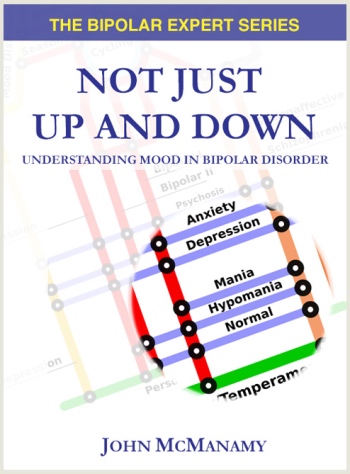
My New Book!

Purchase now.
The other killer aspects of the perfect mental storm are just as real, but not readily apparent. Researchers are now beginning to uncover the links between depression and heart disease, depression and diabetes, depression and cancer, and depression and stroke - amongst others - and what they are finding suggests mental illness going to work in a variety of insidious ways, all with the power to kill.
A study of 5201 men and women aged 65 years and older published in the Archives of Internal Medicine reported that even milder forms of depression constitute a mortality risk factor in the elderly. An accompanying editorial concluded that "suicide explains only a small proportion of the increase in mortality among the depressed ... "
Moreover:
Depression now demands the aggressive level of research in the next quarter of a century that smoking, cancer, and heart disease have received in the past quarter of a century.
Ken Duckworth MD, former Deputy Commissioner of the Massachusetts Department of Mental Health, advised any MDs in the audience at the 2002 NAMI conference that "you need to be thinking of [your patients] as if they already had a heart attack."
His epiphany came when as a young doctor working in a mental health facility someone came up to him and said, "Ken, you guys are getting fabulous at doing memorial services."
A 1999 study his department initiated found that the risk for cardiovascular disease for people with serious psychiatric illness in Massachusetts ranged from twice as high to six times higher than normal, depending on age. Respiratory illnesses were four to six times higher and diabetes twice as high. For individuals between the ages of 15 and 64, the death rate is 1.4 to 3.3 times higher for Department of Mental Health clients than for the general Massachusetts population.
Mental Illness' True Kill Rate
Subsequent studies validate the Massachusetts findings:
A 2006 CMHS study of the records of deceased public mental health clients in eight states found lowered life expectancies ranging from 13 to more than 30 years. The study cited these possible causes: Lifestyle (including long-term antipsychotic use and sexual practices), social consequences (such as poverty), and difficulties in accessing health care.
With regard to antipsychotic use, an editorial in the Oct 28, 2009 JAMA commented with a great degree of concern over the findings of a study involving treatment-naive kids taking second-generation antipsychotics. The mean weight gain over 12 weeks for Zyprexa was 19 (not a typo) pounds. For supposedly weight-friendly Abilify it was 10 pounds.
We're not finished. A 2007 Florida Atlantic University study published in JAMA found that serious mental illness - including depression, bipolar, and schizophrenia - takes 25 years off of one's life. And a 2011 Kings College study published in PLoS One of deceased mental health clients in a London neighborhood found 8.0 to 14.6 life years lost for men and 9.8 to 17.5 life years lost for women.
Reckless Behavior
The perfect mental storm keeps raging. A meta-analysis of 25 pervious studies published in the Archives of Internal Medicine found that depressed patients are three times more likely to be noncompliant with their medical treatment recommendations (not just for depression), such as not taking meds and refusing to follow a diet.
A study in the British Medical Journal found that teens with depression are more likely to engage in risky sexual intercourse, contract sexually transmitted diseases, and have sexual intercourse before age 16. The fact that depression was linked to these outcomes was of particular concern, according to the authors, as rates of depression are known to escalate from age 15 to 21 - the period when sexual activity also emerges.
Then there is the whole issue of mental illness and smoking and alcoholism and substance use.
Surviving the Perfect Mental Storm
So it is that the perfect mental storm cascades upon our inadequate psyches from all points of the compass, threatening us from whichever direction we turn with death by suicide, death by medical complications, death by reckless behavior, and - unkindest cut of all - death by the side effects of the very meds meant to help us. Our battered minds, in a state of severe distress, send out maydays which may never be heard as the animus within us succumbs to forces no one should have to bear.
For those who survive, the feeling can be one of looking up at a pale moon-like sun breaking out from suffocating grey clouds. It is a time of subdued thanksgiving and quiet contemplation. The storm may yet engulf us, if not now perhaps a few hours from now or a few years from now.
In the meantime, though, we can take comfort in the knowledge of having emerged whole from one of the most destructive and terrifying phenomena in all of nature - the perfect mental storm. Of all things, it is an ordeal that has strengthened us, toughened us, and imbued us with a sense of hope and renewal.
And so we finally reach a safe harbor, where we rededicate ourselves to reclaiming our lives - one day at a time, if it comes to that - with a new respect and profound sense of awe of what we are up against, but also with a new regard for the gift of life.
First published 2000, latest update Jan 5, 2011
 |
More articles on mood. |

