Mood
 BIPOLAR - REALLY A CYCLING ILLNESS

Episodes get all the attention, but our cycles are the driving force and defining feature.
by John McManamy
BIPOLAR - REALLY A CYCLING ILLNESS
Episodes get all the attention, but our cycles are the driving force and defining feature.
by John McManamy
WHEN I step out of the house, I go through the same mental checklist as everyone else - keys, wallet, phone, on and on. But I'm also performing a systems check on my brain. This sort of thing runs in the background all the time, but when I'm headed out the door the exercise assumes a quality of anal high drama, like a shuttle launch countdown ... Make sure my head is screwed on right.
Ha! If people only knew. I live with bipolar. Most of the time I go about my life as if I don't have it, but that is only because I take nothing - including an operational brain - for granted. Breathe! I remind myself. All systems go. I'm ready to face the day.
Bipolar - It's Really All About Cycling
Bipolar is entirely the wrong term for my illness, your illness. "Cycling" is far more apt, suggesting the brain in perpetual motion - moods, thoughts, perceptions, everything - nothing standing still, everything shifting, nothing predictable.
But is there there anything up ahead I can at least anticipate?
Day slips into night, the moon waxes and wanes - my brain is a veritable I Ching. I may head out into the world cool, calm, and collected, but will my brain be working for me two hours from now when it really matters? I already know what I'll be like on the way home, a wrung-out dish rag, too spent to stop off at Trader Joe's. Is there enough food in the fridge?
Breathe! I remind myself. Breathe.
Way back in 1854, the French psychiatrist Jean-Pierre Falret came up with "la folie circulaire" (circular insanity) to explain the extreme mood changes he observed in his patients. The pioneering German diagnostician Emil Kraepelin coined the term "manic-depressive insanity" to describe what he saw as a much wider and more complex phenomenon. Nevertheless, cycling was a central piece to the puzzle. In the 1921 English translation to his classic "Manic-Depressive Insanity," Kraepelin describes the illness as including "the whole domain of so-called periodic and circular insanity."
What we call bipolar is an enormously complex illness, but strip it to its most essential element and what we're left with can be best described as a "cycling illness." Simply knowing that we have ups and downs is not sufficient. What we need to know is how these ups and downs relate, what is driving them, and what else is interacting with the dynamic.
Our "episodes" (depressed, manic, hypomanic, and mixed) only make sense in the context of the cycle that propels them. Is our hypomania(mania lite), for instance, a prelude to a crushing depression, or is it a warning that we are about to get swept up in a full tidal mania?
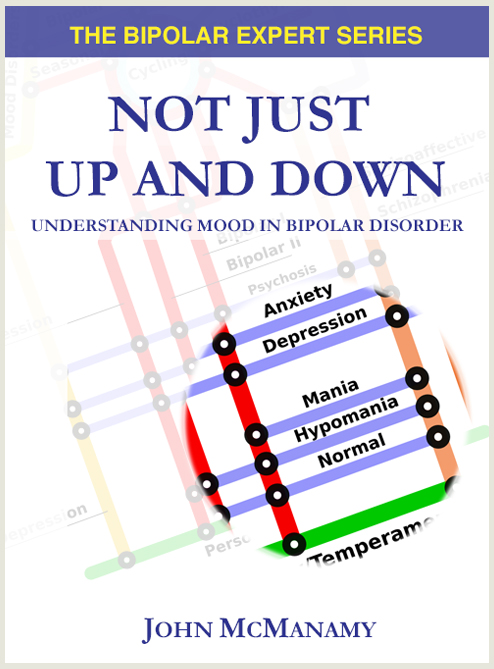





And what about the type of things that play havoc with our cycles, such as staying up all night to complete an assignment or cross-country travel?
In the second edition to "Manic-Depressive Illness" (2007), Goodwin and Jamison make it clear we are talking about more than one cycle, from the glacial pace of the shifting seasons to daily circadian rhythms. Kraepelin emphasized that there was a lot more to cycling than just mood, including intellect and volition, and not necessarily in sync. This would account for seemingly exotic but in fact fairly common variations to our moods such as "excited depressions" and "inhibited manias."
Let's rephrase: We are talking many cycles, not just one. Cycles within cycles, if you like. Throw any one of them out of whack and there goes your precision timing, your sense of being in control. Then life becomes a mad scramble, like juggling spinning plates. Inevitably, it happens - the plates crash to the floor. But always in a perverse slow motion that gives you just enough time to make the horrible realization - yet once again - that things have slipped away from you. And there you are, alone in the awful bitter aftermath, left to pick up the pieces.
Let's re-emphasize: Kraepelin saw a lot more to this thing we classify as a mood disorder than just mood. If mood were the only thing I had to worry about. It's mood AND thoughts. And other things.
Thoughts, racing thoughts, like running on rocket fuel. Thoughts, sluggish thoughts, like being mired in molasses. Albert Einstein one minute, Forrest Gump the next. Racing thoughts are typically associated with mania, but Kraepelin also talked about "depression with flight of ideas" and "manic stupor."
SIGN UP FOR MY FREE EMAIL NEWSLETTER
Think of all those spinning plates up in the air, out of sync, out of alignment.
Okay, let's make it simple, real simple. Let's imagine all the wheels within wheels resolving into one cycle, what we commonly refer to as the mood cycle, characterized by depressions and manias and well states, not to mention all manner of in-between states, plus the thinking and all the rest of it.
A smart clinician aware of the turning wheel will never take a patient presenting with depression at face value. He or she will seek out evidence of past mania - or, for that matter, anything resembling "up." Merely treating the "episode," after all, may only make the cycle worse.
Bipolar - A Personal Example
After a lifetime of trying to pretend nothing was wrong with me, I finally sought help at age 49, in a state of near-suicide. The psychiatrist concluded the culprit was clinical depression and prescribed a standard antidepressant.
The pill worked uncommonly fast. Within a day or two, my energy had returned, my dark mood lifted, and for one brief shining moment I had an insight into what it's like to feel normal - better than normal, even.
By now my mind was racing. I started making grand plans.


Meanwhile, my mind kept racing. I thought that this was just a side effect that would go away, so I took another pill. After all, the very last thing I wanted to happen was crashing back into that horrible depression of mine, knowing full well that next time there could be no return.
But my racing mind refused to stop. Instead, it cranked into an even higher gear. I couldn't sleep, my heart was pounding, I was talking a mile a minute, and soon vividly hallucinating. Roller-coaster was totally inadequate to describe the experience. I was not driving my brain. Rather, my brain was driving me.
Ping! Flip City. Totally manic.
For the crisis intervention psychiatrist who later saw me, it was a no-brainer. "Bipolar mixed," she wrote on the script with no comment. With those two words, my life changed. I was branded.
By the same token, I was also relieved. After decades of denial, I knew what I was up against. Having identified my adversary, I could begin to fight it. Still, twelve years later as I am writing this, I can't help but wonder: How did my first psychiatrist get it so spectacularly wrong? Why was he so reckless in prescribing an antidepressant, a medication that exposed me to such obvious danger?
Okay, let's cut the guy some slack. Most people with bipolar do not receive a correct diagnosis until their third or fourth try, usually years later. After all, we never show up for a first appointment saying, "Hey, Doc, I'm feeling great. Can you put me on something to make me miserable?"
No, I was depressed, severely depressed. All I talked about was my depression. All of them - my depression within a depression, my depression following a depression, my depression following the depression on top of the depression, and so on. My "ups" were what I mistook for normal behavior. Besides, in the state I was in, my psychiatrist wasn't about to mistake me for the type who danced on tables, and neither was I.
The psychiatrist knew what he was doing. He asked a lot of questions. He pressed for family history and all kinds of stuff. But my palpable condition of excruciating psychic distress threw him off completely. By focusing on the state I was in right now, he missed completely the state I might be at some other point in my future - all part of my inexorable cycle, my personal wheel of life.
I know I told him I was a writer. Had he pressed me on this, he would have discovered 11 or 12 years earlier I had written a book in five weeks - shortly after storming into my boss' office and quitting my job in a huff with no other job lined up.
He missed all that. But, hey, I mess up, too.
Bipolar - Take Home Message
Time and again, you will hear of bipolar described as an "episodic" illness. True, we do experience episodes, but we must never lose sight of the fact that what drives these episodes are our cycles, which ultimately define this illness. Falret got it right in 1854. La folie circulaire. Circular insanity. Cycling ilness.
Next: We look at bipolar episodes ...
Reviewed June 18, 2016
VIDEO
NEW!
Follow me on the road. Check out my New Heart, New Start blog.