There is no magic bullet.
The first thing to know is that while the right medication can be a godsend, there is no one-drug-fits-all, and the process of finding the one that works for you can sometimes turn into a nightmarish game of hit and miss.
Antidepressants are classified by their chemical structure and how they act. Even the experts do not know exactly how these medications operate, other than they optimize neurotransmitter activity in the brain.
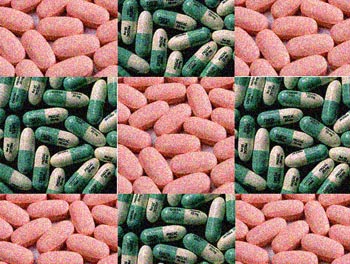
Which class of antidepressant came first is a question lost in time. MAO inhibitors arrived on the scene back in the nineteen fifties, but the first of these drugs were quickly taken off the market. The holdovers from this era are mainly used as a medication of last resort, after the newer varieties have failed. Nardil (phenelzine) and Parnate (tranylcypromine) are the best known. They operate by blocking out the enzyme, monoamine oxidase, which gives the neurotransmitters serotonin, norepinephrine, and dopamine a chance to do their work. Because of their action on other chemicals in the body, users must severely restrict their diets, at the risk of an extreme reaction. In addition, MAO inhibitors can be as subtle as the proverbial 800-pound gorilla. Possible side-effects range from nausea to weight gain or loss to insomnia to sexual dysfunction to just about everything in between.
Nevertheless, MAOIs are considered especially effective for treating atypical depression. The development of a transdermal patch and of a different class of MAOIs called RIMAs promise much greater tolerability (see article).
The tricyclic antidepressants were introduced about the same time as the MAO inhibitors. Imipramine (Tofranil) can claim to be the oldest antidepressant still in service. Desipramine (Norpramin), Nortriptyline (Pamelor, Aventyl), and Amitriptyline (Elavil) also fall into this category. They work by preventing two neurotransmitters - norepinephrine and serotonin - from being absorbed by the brain cell's receptors, and can be a life-saver where other medications have failed. Some experts contend that because these meds have strong action on two neurotransmitters, they may be more effective than the newer generation of antidepressants, which largely zero in on only one. But owing to the fact that tricyclics are imprecise weapons that take out unintended targets such as opioid receptors and histamine receptors, patients are at risk for a range of unwanted side effects. Overdoses can be fatal.
The SSRIs (selective serotonin reuptake inhibitors) work in a similar fashion to the tricyclics (ie preventing serotonin from being reabsorbed), but with more finesse than the tricyclics (hence the term, selective). This results in fewer side effects, tending to make them the medication of first choice. But because serotonin is such a prominent neurotransmitter that mediates a host of mental and physical functions these drugs still flip a lot more chemical switches than they should, posing a range of side effects issue, the most prominent being sexual dysfunction. Accordingly, the hype that followed on the release of these drugs has now died down, and the public is at last beginning to see them for what they truly are - if not the proverbial 800-pound gorilla, then perhaps one that weighs in at 400 pounds.
Celexa (citalopram) and Luvox (fluvoxamine) were the first of these drugs, introduced in Europe in the mid-eighties, but it was Prozac's debut in America in 1987 that attracted all the attention and helped eliminate much of the ignorance and stigma surrounding depression. Zoloft and Paxil followed in the mid-nineties. A cleaner version of Celexa, Lexapro (escitalopram) was approved by the FDA in 2002.
Compared to earlier generations of antidepressants, SSRIs are no more efficacious in treating depression. Their one advantage continues to remain their moderately more benign side effect profile.
Test subjects who are depleted of tryptophan, an amino acid precursor of serotonin, will get depressed, and a case can be made for tryptophan therapy to get serotonin back in circulation. SSRIs are more complicated, working on the brain's serotonin system rather than the serotonin itself, by blocking off certain escape routes so the available serotonin stays in circulation.
There is only one problem with the conventional explanation for how SSRIs work - namely, science can't explain why it takes several weeks for these pills to achieve their therapeutic effect. One theory is that impulse flow inside the neuron is initially dampened by the antidepressant, but once the current is turned back on serotonin is released across a synapse (divide) and absorbed by the post-synaptic cell. The presynaptic neuron than acts as a vacuum to clear what's left of the serotonin from the synapse in preparation for the next round of serotonin release. According to long-held belief, it was the SSRIs' (and tricyclics') ability to bind to certain receptors and block serotonin's "reuptake" that resulted in these drugs' antidepressant action.
New research now indicates that antidepressants may simply kickstart neurotransmitters, which in turn set in motion molecular cascades involving processes critical to cell maintenance and survival (see article). One or more of these downstream effects, such as perhaps the growth of new cells in the brain's hippocampus (with a lag of several weeks), may either be the cause of the antidepressant's clinical effect or something that must happen before the neurotransmitters can do their work.
Identify the exact targets inside the neuron (ie where these molecular cascades take place), the thinking goes, formulate compounds that will zero in on these targets, and - voila! - your perfect magic bullet, tailor-made for different types of depression, with no side effects. But we're light years away from making that happen.
Serotonin, as you may have guessed, is involved in mood and emotions, but it also plays a role in sleep and digestive functions and pain. Norepinephrine (targeted by Effexor, Cymbalta, Remeron, and Wellbutrin) is associated with the flight or fight response and pain, and dopamine (targeted by Wellbutrin) is identified with pleasure and reward.
Surprisingly, even though SSRIs are more expensive, an Oregon Health Sciences University study has found that this class of drugs cost less to treat patients in the long term than the TCAs. Reasons include lower dose adjustments, single tablet regimens, and often shorter duration of treatment.
Some of the newer drugs - Effexor (venlafaxine), Wellbutrin (buproprion), Remeron (mirtazapine), Serzone (nefazodone), and Cymbalta (duloxetine) - technically belong in unique classes of their own, but are generally mentioned in the same breath as the SSRIs. Effexor and Cymbalta both have dual reuptake action of serotonin and norepinephrine, not unlike the tricyclics, while Wellbutrin works mainly on both the neurotransmitter dopamine and norepinephrine. Remeron and Serzone both operate on the brain's alpha-adrenergic-receptors (which affect norepinephrine and serotonin). The point to be made here is that there exists a sufficient variety of newer medications to offer hope to even the hardest cases, however unsuccessful previous attempts may have been. (For a more complete discussion on how antidepressants work on neurotransmitters, see article.)
Drugs in the pipeline include CRF antagonists, which work on stress-induced depression by neutralizing the hormone responsible for releasing cortisol into the system. Several companies have these drugs in development.
Published studies indicate that antidepressants result in a response (ie a 50 percent reduction in depression scores) in two-thirds of subjects over the course of a usual four to eight week trial. The FDA database, however, which includes studies not published, reveals that the success rate is more like 50 percent.
This corresponds with new advice from the Royal College of
Psychiatrists in the UK, which in early 2002 amended an earlier 60 to 70 percent success figure to 50 percent.
Fifty percent of patients getting only fifty percent well is not exactly encouraging. Add to that the phenomenon of Prozac poop-out and the prospect of high relapse, and one is entitled to question whether the side effects are worth trying an antidepressant in the first place.
For those with serious depression, the odds may be even worse. A JD Power and Associates survey of more than 27,000 managed care members found that of the 11 percent with depression, 87 percent felt that their primary medication was effective or very effective, but only 24 percent with severe depression felt the same way about their antidepressant. Nearly 75 percent of patients with severe depression have switched primary meds vs 30 percent of patients with mild depression.
Fifty-fifty odds or worse of achieving fifty percent improvement, however, is misleading. In one sense, the real world odds can be even worse, as the primary care physicians who prescribe most of the antidepressants do so under less than ideal conditions. But you can dramatically turn the tables in your favor by not giving up. The American Psychiatric Association in its Practice Guidelines for the treatment of depression recommends switching to another antidepressant if the first one does not work and to a different class of antidepressant if the second one fails.
Several open-label studies published in the Journal of Clinical Psychiatry over the years have demonstrated the value of switching to a second SSRI after the first one has failed, with response rates ranging from 42 to 71 percent. Likewise, a multi-center double-blind study published in the March 2002 Archives of General Psychiatry illustrates the benefit of switching to a different class of antidepressant. In that study, of 117 chronically depressed patients who failed to respond to Zoloft after 12 weeks and 51 patients with similar bad luck on the tricyclic imipramine, more than half from each group benefited from switching to the other.
Other strategies include combining your antidepressant with another antidepressant or augmenting your antidepressant with a different class of drug such as a thyroid drug or lithium.
You also improve your chances by not quitting on your medication. One study of 936 patients on Serzone found remission rates still climbing after eight to ten weeks.
Still, even the most persevering can be frustrated by a long and drawn out game of pill roulette that can take months or (in rare cases) even years to resolve, that is if they don't give up in despair, first.
But even the lucky ones are in for a difficult initial several weeks, for antidepressants have a perverse way of making their side effects known almost at once, weeks before their healing power kicks in, when the depression is raging at its fiercest. The side effects tend to diminish over time, but too late for many distressed patients who have given up long before then. Here - and this is tough - you must have faith. Barring some extreme side effect or medical emergency, you need to give your prescription a full eight weeks to work.
A 2003 multi-center open trial of 840 patients on Prozac illustrates the importance of not quitting on your antidepressant. Of the 607 who completed the study, 424 achieved remission at week 12. Thirty-one to 41 percent of patients who were unimproved at week six achieved remission at week 12. Twenty-three percent of unimproved patients at week eight had remissions by week 12. At week 10, patients reached the point of diminishing returns, with only three of 68 partial responders remitting at week 12. Concluded the study's authors: “Nonresponse to [Prozac] should not be declared until eight weeks of treatment have elapsed.”
And another eight weeks, should you have to switch medications. And again, another eight weeks, if necessary. These heartbreaking searches for the right drug can cause as much despair as one's actual depression, but with one important difference: Those past struggles against depression were all in vain. This time you are battling for your own healing, a fight you have an excellent chance of winning.
Updated Feb 10, 2008
Our Favorite Neurotransmitters
They already changed your life. Now find out why.
Knowledge is Necessity
Copyright 2009 John McManamy Contact
You're in the right place. Check out your video guide to McMan's Web.
"Be warned! These musings are addictive." - Kimberly Read, About.com - Bipolar.
Featured Blogs

"We are who we pretend to be. You can’t go wrong pretending to be JFK or Martin Luther King." Plus more words of wisdom from the newly-anointed family patriarch and elder.

Advice to a New Grandson - Part II
"God has a funny way of treating people He loves most. Just ask Joan of Arc." Plus more stuff I wish I knew when I was two days old.
Latest Blogs
Schizophrenia in a seven-year-old? Impossible, you say? An eye-opening account from the family.
Scott Gregory Hawkins - Who Will Speak Out?
When a college student with Aspergers is found beaten to death in his dorm room, one can't help but ask the obvious questions.
My Zombie State is Other People's Normal
My normal can be very unpredictable, but at least I know I won't embarrass myself when I feel out-of-it and depressed.
Think you can't be manipulated? The people who signed a petition to ban dihydrogen monoxide (another name for water) didn't think so, either.
Robert Spitzer and the DSM - Part V
This five-part series (and counting) looks at the brief history of diagnostic psychiatry and the man responsible for how we (and our clinicians) view ourselves.
My Life as an International Awardee - Conclusion
A speedy traverse of my life (in three parts) as the surprise recipient of a major award and why it didn't change my life but sure helped in my recovery.
How a conversation with my daughter triggered a long-suppressed happy memory and offered a healing moment.
How two five-second Zen moments 30 years apart changed my life.
Recent Videos
"Nicely produced and edited. I'd love to see more frequent updates." - Sandra Kiume, journalist
The world's oldest wind instrument brings out the playful and spiritual side in me.
Mindfulness - Living in the Present
We forget. The present is where life is happening - here, right now.
Don't just sit there. Build yourself a tree.
Don't be fooled. There's always a somewhere.
Nature heals. So do our brains.
No koalas were harmed making this movie.
Mindfulness: The Ultimate Mood Stabilizer
The Buddha was on to something ...
Do people with bipolar cycle in and out of time? Call me bichronic.
In the Spotlight

Lincoln and Darwin were born on the same day, 200 years ago in 1809. These two articles discuss how their actions and ideas apply to you:
His unremitting despair and constant failures steeled his character.
Is there a selective advantage to depression and bipolar?
A Random Sampling
Now that you're familiar with the DSM-IV, forget everything you've read.
A leading anthropologist explains the birds and the bees.
We're depressed way more than we are manic. Now if psychiatry only knew how to treat us.
Mindfulness - The Ultimate Mood Stabilizer
What is arguably the most effective recovery tool requires a highly disciplined mind.
Dopamine - Serotonin's Secret Weapon
A smart dopamine med may do wonders for your depression or bipolar or mental acuity. The problem is one doesn't exist.
No, it's not normal kid behavior.
An innovative researcher discovers that patients know best.
Living Well With Depression and Bipolar Disorder by John McManamy (HarperCollins 2006)
"I doubt there is a person in the world who knows these conditions better, inside and out, than John McManamy ... He weaves together the science and the inner experiences of depression and bipolar disorder in a way that is quite rare. This book is full of studies and personal insights, in about equal measure, leavened with the practical conclusions of its even-handed and often humorous author. It breaks new ground." - Nassir Ghaemi MD, Tufts University
Sample Amazon Reviews
"John McManamy has an outstanding ability to describe his and other's experience of having bipolar disorder in all its complexity. He never tries to take the place of the patiet's psychiatrist. He refers his readers to other sources of excellent more detailed clinical information. He tells the human side of the story. He teaches patients how to be better informed consumer's of psychiatric care. He encourages patients to be active participants in their recovery." - Raymond
"This is one of the best books I've read on the subject of Bipolar Disorder or Depression. Filled with real world examples, and crammed with information this book will empower you to take charge of your illness." - Eileen