Behavior
 BORDERLINE PERSONALITY DISORER: PART I

When "normal" goes wrong.
by John McManamy
BORDERLINE PERSONALITY DISORER: PART IWhen "normal" goes wrong.
by John McManamy
IN 2005, I joined the board as an officer in a state DBSA group back east. There, I came across behavior I could not ascribe to bipolar disorder – extremely abusive verbal attacks, explosive meltdowns, public outbursts, poison pen emails, delusional self-centeredness, love and light one minute, fire and brimstone the next.
Yes, bipolars can behave badly, but this was different. For my own self-preservation, I got out of this toxic environment and cut off all ties with the state organization. I literally wound up hating these individuals. But I also recognized how lonely life must be for them. None of them was married or in a loving relationship. None of them had children. None of them was employed. All of them engaged in frightening behavior. All were serious accidents waiting to happen.
The illness is called borderline personality disorder. On the surface, the emotional volatility, impulsivity, depressions, mood swings, high drama, and destructive behavior of individuals with this diagnosis resemble bipolar disorder. The suicide rate is in the bipolar ballpark, and the pain and isolation individuals with this illness experience is similar, if not more so.
No wonder they are drawn to depression and bipolar support groups, I realized. We have a lot in common. Unfortunately, there is only so much we can do to help them. Only one of the individuals I encountered openly acknowledged the diagnosis. The others, I assumed, had not been diagnosed. Yes, they may have had bipolar disorder, but something else was going on here, and they were not being treated for it. Their psychiatrists were sending them out into the world with mood stabilizers and false hope.
My curiosity was aroused, particularly when I started connecting the dots to other individuals I had encountered in my life. I needed to find out more. The 2006 American Psychiatric Association annual meeting was approaching, and I made it a point attend the few sessions they had on personality disorders.




Is Borderline Real?
Unexpectedly, the first borderline discussion there occurred during question time at a packed luncheon symposium on bipolar II. One of the presenters, Terence Ketter MD of Stanford, happened to say that as opposed to bipolar disorder, which is about MOOD lability (volatility), borderline personality disorder is about EMOTIONAL lability. As soon as they develop an emotion stabilizer (analogous to a mood stabilizer), he said, borderline personality disorder will become an Axis I disorder rather than Axis II.
A little history: The DSM-III of 1980 introduced the axis system to mental disorders (since done away with in 2013 by the DSM-5 of 2013). In general, illnesses that could be treated by meds (that by implication had a biological component) were accorded Axis I status. The personality disorders, including borderline, were assigned to Axis II. As biological psychiatry gained in influence, Axis II came to be seen as the last refuge of Freud.
What Dr Ketter was saying, in a diplomatic way, was that borderline had a way to go before it picked up respect.
Dr Ghaemi referred to borderline as a "clinical condition" rather than a disease, one best treated by psychotherapy. In a 2013 journal article, he fully elaborated. The DSM-III, he wrote, erred mightily when it classified all its diagnostic entries as “disorders,” as if bipolar were not to be taken seriously as a medical illness.
Basically, bipolar is from Kraepelin, borderline from Freud. Two different world views, but could there be a reconciliation?
Dr Goodwin, who was running the proceedings, turned to Dr Akiskal, and in a friendly way goaded him: “Come now,” he said, “what do you do with the patients you don’t like?” Words to that effect.
Nothing could have prepared me for what came next. “I like all my patients!” Dr Akiskal thundered. Then: “I don’t have any use for the borderline diagnosis.”
Hold off on that reconciliation.
SIGN UP FOR MY FREE EMAIL NEWSLETTER
It didn’t take me long to discover that Dr Akiskal had been waging war against borderline for decades. A 1985 article he co-authored had this title: "Borderline: An Adjective in Search of a Noun."
The next day found me in a largely vacant hall listening to Joel Paris of McGill University deliver an award lecture on personality disorders. Significantly, he was not about to let Dr Akiskal go unanswered. Referring to Dr Akiskal’s long-standing hostility to borderline, Dr Paris let it be known, "I would say that is wrong."
In true Axis I depression, Dr Paris explained, when patients come out of a depression, they are nice people again. Individuals with personality disorders, by contrast, can come out of a depression and still have problems with life. Unfortunately, clinicians prefer not to want to hear about personality. It means trouble. They would rather throw more meds at the problem.
In the five years I had been attending APA meetings to that point, you would scarcely know there was such a thing as personality disorders. But that would change three years hence. The 2009 APA annual meeting in San Francisco had nearly as many presentations devoted to personality disorders and related issues as to mood disorders. Moreover, its experts were speaking to packed rooms. A major sea change had occurred. Personality disorders were gaining respect.
Perhaps “regaining” is the more appropriate term. Recall that for the longest time Freud and his followers ruled the roost, typically to the detriment of serious scientific enquiry. How bad was it?
At the 2004 APA meeting in New York, I heard Jack Barchas, the man who identified serotonin’s connection to behavior, recall way back having his ideas challenged by his mentor. “How is this justified in the writings of Freud?” asked the mentor.Science, the physicist Neils Bohr observed, advances one funeral at a time.


But bipolar hardly explained the appalling behavior I had encountered while trying to set up a state DBSA. Had psychiatry, in effect, failed them? Sent them out the door with the wrong diagnosis and useless meds and false hopes? By 2009, if the APA meeting that year were anything to go by, the rank and file in psychiatry appeared to be asking similar questions.
Why, in effect, weren’t their bipolar patients getting better? Was there a missing piece to the puzzle?
At first blush, borderline appears indistinguishable from bipolar, and the DSM symptom list does little to disabuse us of that notion. Thus, borderline symptoms 4 through 7: impulsivity, recurrent suicidal behavior, affective instability, chronic feelings of emptiness.
In addition, borderline includes a symptom that one could, with reservations, apply to bipolar mixed states: “Inappropriate or intense anger or difficulty controlling anger.”
In a 2006 article in the American Journal of Psychiatry, John Gunderson of Harvard noted that misdiagnosing patients with bipolar, especially bipolar II, is the norm. According to Dr Gunderson, periods of depression and irritability are rarely instructive. Neither are sustained periods of elation. What we are really looking for are reactions to interpersonal stress.
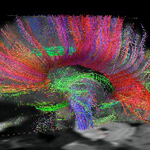
This harkens back to the days of the “maladaptions” of the ancient DSMs I and II, only this time we have support from modern brain science. In 2008, the NIMH reported on a series of brain imaging studies led by Michael Minzenberg of the University of California, Davis. In one study, in response to being shown images of “scary faces” (a common research practice), patients diagnosed with borderline displayed overactivity in the amygdala (involved in fight or flight) and underactivity in the anterior cingulate cortex (which acts as a modulator to limbic over-excitement.)
As with the case of so many psychiatric conditions, we have a classic picture of the thinking parts of the brain being overwhelmed by the reactive parts of the brain. This is a scenario that cuts across a host of psychiatric conditions and blurs their distinctions. The study hardly constitutes proof of the borderline diagnosis. But clearly, we are looking at brains not optimally equipped to handle life.
The money question, then, is what is unique about borderline? The answer lies in those “maladaptions.” The best-known involves "splitting," in which people are perceived as either all good or all bad, nothing in between. In DSM-speak, we see "a pattern of unstable and intense interpersonal relationships characterized by alternating between extremes of idealization and devaluation."
“Splitting” extends to manipulative behavior, in which the “all-good” individual receives favor at the expense of the “all-bad” one. That is, until the all-good party becomes all-bad. This can happen in the blink of an eye. Suddenly, for no apparent reason, the party with borderline lets loose on his or her victim, erupts, explodes.Or it may be more subtle—the silent treatment, inappropriate put-downs. If the borderline party is nursing some kind of resentment, this can go on forever. Those living around someone with borderline compare the experience to walking on eggshells.
But would you want to trade places with such an individual? Throw in other DSM symptoms such as fear of abandonment, identity disturbance, and stress-induced paranoia, and a portrait emerges of an extremely fragile individual negotiating a frightening and unpredictable world, at a loss how to respond. Marsha Linehan of the University of Washington, who devised dialectical behavioral therapy (DBT) as a means to help her patients navigate their terrifying environment, says “borderline patients are the psychological equivalent of a third-degree burn patient.”
I received an insight into this during the next stage of my journey, at the 2006 NAMI convention in Washington DC. Significantly, NAMI had just expanded its list of "priority populations" to include those with borderline personality disorder. This meant, probably for the first time, their convention had a session devoted to the illness. There, I had a chance to listen to patients speaking openly in an environment where they felt safe.
“Anne,” in her late 30s-early 40s, came across as someone who had it all— smart, attractive, personable. She had a degree in creative writing, but the best job she could get was answering phones. Her illness cannot take the demands of something more challenging, she informed us. Amongst people, in stressful situations, she loses it. You don't want to be around her.
As opposed to walking on eggshells, Anne compared her dealings with people to "walking on shifting boards." The world is far from a safe place, she related, and the ground beneath her could collapse any second.
"It's like demons possess me," she went on to say. Something inside of yourself so overwhelms you that you want to change it instantly. Such as slitting your wrists, impulsive sex, alcohol, and acting out. She described individuals with borderline as spontaneous and lively and loving until they get hurt. Then they screw up and fall apart.So—does Anne come across as a different breed of human than you? Consider:
Conventional psychiatry regards bipolar as episodic. This strongly suggests that our depressions and hypomanias and manias and anxieties bear primary responsibility for our extreme and often outrageous behaviors. The implication is that once we settle down to normal we feel mortified and ashamed by the actions of our evil twin. Hopefully, as our “real selves,” we can return to our old lives of being model citizens and ideal partners and all the rest.
With personality disorders, however, there are no episodes, no evil twins. Life is played out in normal, and normal is booby-trapped with situations that constantly go wrong. If there happen to be additional concerns such as being caught up in one’s delusional sense of self-importance or lacking any capacity for empathy, there may be no remorse, no regrets.
In personality disorders, in other words, there is no safe harbor, no place to call home. “Normal” is a dangerous location, a permanent hell. Once I grasped this, all the pieces fell into place. Not only did it explain the abominable natures of the people I ran into trying to set up a state DBSA, it also filled in the blanks on all those miserable people in my life who had been sent to earth for the sole purpose of testing me.
Thank God I’m not one of them, was my first reaction. I may be crazy, but at least I’m not an asshole.
Not so fast …
Revised June 27, 2016
NEW!
Follow me on the road. Check out my New Heart, New Start blog.