Science
 THE DARWINIAN CHALLENGE
Is there an adaptive advantage to our strange behavior?
by John McManamy
THE DARWINIAN CHALLENGE
Is there an adaptive advantage to our strange behavior?
by John McManamy
WAY BACK in 2001, I received an email from Kerry, who wrote: "Something I don't see written about is why bipolar would exist in the first place. It's clearly genetic. So, from a Darwinian point of view it may have had survival values ..."
It turns out that Kerry was on to something, and that the people who get paid to do our thinking for us have already given this matter a lot of thought. We are talking about a relatively new discipline called evolutionary biology. In the words of the late Cal Tech geneticist Theodosius Dobzhansky: "Nothing in biology makes sense except in the light of evolution."
Enter Darwin
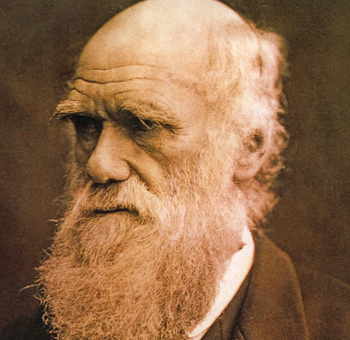
Here's an interesting fact: Peacock tails drove Darwin crazy. The sight of one "makes me sick," he wrote. These feathered accessories played havoc with his work-in-progress theory of natural selection. Surely, any bird stupid enough to flaunt their colors in the wild wouldn't live long enough to mate.
Darwin's solution seems obvious enough today, but back in the nineteenth century it was a scientific breakthrough, a work of genius. The showy tails, he figured out, were chick magnets. The flashier, the better. The well-endowed cock, so to speak, won the right to make a deposit. The bird's genes would live on, even if its owners' days were numbered.
Evolutionary biologists refer to this as a trade-off. A high fever, for instance, may aid in the destruction of deadly pathogens, and without the inconvenience of coughing we would all likely die from pneumonia. Take away our ability to experience pain and we would never know our appendix has burst. The sickle cell gene, in turn, is protection against malaria.
A Darwinian Explanation for Mental Illness
Fine. But how does Darwin apply to mental illness? According to evolutionary biologist Randolph Nesse MD of the University of Michigan:
Psychiatrists still act as if all anxiety, sadness, and jealousy is abnormal and they don't yet look for the selective advantages of genes that predispose to schizophrenia and bipolar disorder.
I heard Dr Nesse at the 2005 American Psychiatric Association annual meeting talk about the selective advantage in anxiety. Obviously, sufficiently anxious cave men and women were able to steer clear of saber toothed tigers long enough to find an opportunity to pass on their genes to the next generation.
Dr Nesse asks us to imagine a distant ancestor of ours at an ancient watering hole. The poor guy hears a sound behind him. A lion? A monkey? Even if it’s just a mouse, panicking first and thinking later is not such a half-bad idea.
Anxiety traits are no mere artifacts of an earlier age. Anxiety is crucial to marshaling our wits. We could never survive one day in traffic without it, let alone the full range of personal interactions.
Dr Nesse compared the brain's limbic system to a smoke detector that is programmed to deliver 1000 false alarms for every genuine alert. The false alarms are the price of survival. Better to be too anxious.
Now imagine modern man in the supermarket having a panic attack while reaching for a bottle of water. The seriously anxious, it turns out, have hyper-sensitive smoke detectors. The false alarms and the hyper-sensitive in our midst tend to blind us to the fact that a certain degree of anxiety is good, that we would fail to exist as a species without it.
An application of evolutionary biology is Darwinian medicine. For instance, a medical doctor might want to think twice before prescribing something to lower a patient’s temperature. In patients with panic attacks, Dr Nesse has had success once he helps them realize that their response is not necessarily abnormal. Once that happens, often the power of the panic attack dissipates.
The Darwinian Bipolar Advantage
Our behaviors and emotions, according to evolutionary psychiatry, are adaptations the mind has made to recurring situations. In making a Darwinian case for bipolar, it’s easy to imagine highly energetic and productive and creative types having a selective advantage over their more mundane kinfolk. Think of mania lite. Passing on the risk of more serious manifestations was an acceptable trade-off.




I like to contend that it took a crazy person to run into a burning forest and enthusiastically bring a flaming souvenir back to the cave, raving on about the glories of barbeque. I’m sure this individual's reward was summary eviction by an enraged spouse. Ah, the price we have to pay. It’s never been easy being bipolar.
In my version of the story, the two made up and lived long enough to pass on their traits to the next generation, but only after one of them arrived at the concept of putting the meat on a spit rather than holding it bare-handed over the open flame.
Or bipolar could be a lot more elemental. The illness could be an adaptation to changes in the seasons. Think seasonal affective disorder. Think of a very long cycle. (Goodwin and Jamison refer to this in the second edition to “Manic-Depressive Illness.”)
The Darwinian Depression Advantange
But what about depression? Surely, there can be no selective advantage here. Think again. For one, depression may amount to a failure of denial. Depression is when the rose-colored glasses come off, when reality sets in. It opens the way to acceptance, to setting new goals and moving on with our lives.
SIGN UP FOR MY FREE EMAIL NEWSLETTER
Also, sometimes it’s helpful to be too depressed to press our luck. If mania is all about daring, depression is about caution. The daring have an advantage in life's ultimate prize, the opportunity to mate. So do the cautious.
Depression also provides an opportunity for regrouping and recouping, not to mention a time of introspection and reflection. Think of depression as an enforced time-out. In its own perverse way, depression may set the stage for needed psychic healing.
As with anxiety and mania, we are talking more benign manifestations. The more virulent versions of depression, it seems, are part of the price we have to pay.
Indeed, one can make a strong case that winter depressions and summer manias are tied into our ancient seasonal cycles.
Schizophrenia?
Schizophrenia is far too horrific an illness to see any obvious selective advantage. Yet, the culprit genes have been transmitted from generation to generation, even in Einstein's family. What gives?
First, it is not helpful to look upon schizophrenia as a simple disease. About a hundred suspect genes have been fingered. One of these genes - COMT - has a variation that enhances thought processing in one context but disrupts it in another. Another gene - DISC 1 - helps integrate neurons into the mature brain.
In this context, schizophrenia can be seen as the breakdown in the processes responsible for building and maintaining a complex brain.


Schizophrenia may also be seen as part of a spectrum. At the schizophrenia extreme, the brain is far too active for its own good, characterized by runway thoughts such as psychotic delusions. A lighter version is schizotypal personality disorder, characterized by various oddball behaviors and "magical thinking." Tone this down a bit more and we may be talking about eccentrics who think outside the box.
Nancy Andreasen of the University of Iowa describes Einstein as having having schizotypal traits, as well as a son with schizophrenia. Her original enquiry into creativity involved looking for a schizophrenia connection (also citing Newton and James Watson) but very quickly changed to bipolar.
There may be another aspect to "schizophrenia lite." The book, A Beautiful Mind, chronicles the life of Nobel Laureate John Nash. His breakthrough accomplishments occurred as a young adult, before his outbreak of schizophrenia. But as the book makes clear, there is no way we can describe an apparently healthy John Nash as "normal." Even in a profession notorious for its eccentrics, Nash was very much an outsider.
We tend to think of mental illness as a complete break with reality and rational thinking, but these breaks don't just happen overnight. Subtle symptoms may manifest many years earlier, what the experts describe as "prodromal" states. Could Nash's "beautiful mind" be attributed to such a state? Who knows?
Working With What We're Stuck With
"Human biology," says Dr Nesse, "is designed for stone age conditions." Or, as Leda Cosmides and John Tooby of the University of California at Santa Barbara put it, "our modern skulls house a stone age mind."
In other words, we are the beneficiaries of a group of genes that did not anticipate the demands of modern living. Were we mere machines with replaceable parts, we could simply send our brains back to the manufacturer for a retooling. Instead, we are forced to work with what we're stuck with.
Dr Nesse cites the example of the eye. Those who champion intelligent design point to the wonders of the eye in support of their theory that creation is way too complicated to be left for chance.
But look closely at the eye, Dr Nesse advises. We have wires running between the lens and where the image is processed. No camera manufacturer would be dumb enough to do that. Plus the eye has a blind spot where the retina meets the optic nerve.
The eye of the octopus, Dr Nesse points out, has a far better "design." Through pure chance, he says, we and practically all the rest of the animal kingdom got stuck with the inferior version.
Scientists are in virtual unanimous agreement on evolution's main points, but evolutionary psychiatry is a speculative enterprise, not capable of definitive proofs. Indeed, a legitimate argument can be made that we are retrofitting psychiatry to conform to evolutionary precepts.
Then again, a much stronger case can be made that our behavior makes no sense without taking evolution into account. Instead of viewing all mental illness as solely destructive, we are forced to consider its advantages. And in looking at the advantages, we find potential in our own worth.
Call it the twenty-first century Darwinian challenge. Our ability to feel on levels deeper and higher than the rest of the population, crippling as it may be, has also given wings to our thoughts, ones that motivated our distant ancestors to climb out of their cozy rock condos in the first place and now seem destined to have us reach for the stars.
Update July 11, 2016
The book I am currently working on deals with the relationship between mood and behavior. Not surprisingly, my research has led me deep into evolutionary psychology, and in the process I began to challenge some of its assumptions.
One of the core features of evolutionary psychology is that over the last 10-12 thousand years, in transitioning from hunter-gatherers to agriculturalists and city-dwellers, our genes have not had time to evolve the variants suitable for adapting to our new environment.
This in large part explains why all of us feel so out of place in today's world, and why we feel so disconnected. And to a large extent I agree with this.
But in certain circumstances, certain genetic traits may literally evolve overnight. This was demonstrated in a famous study of Siberian foxes, which became dog-like in behavior after just ten generations of selective breeding. Not only were these foxes more relaxed around humans, their coats developed patterns and their ears became floppy, with less pointy snouts.
In my book, I will be contending that something similar happened to humans: That the forced labor required to tame the land and build the world's first cities amounted to an ancient human breeding program that essentially turned us less intelligent and more compliant, much like domesticated animals.
Those who resisted would not have survived long enough to pass down their genes.
This is pure speculation, mind you, but it goes a long way to explaining why we put up with all manner of absurdities in our own lives without question and without putting up a fight. The rebel in our society may be romanticized in fiction, but the social environment thrust upon us favors those who do what they are told.
A lot of what we call mental illness may, in fact, derive from a certain innate lack of ability to fit in and adapt. To that extent, we may represent the genetic outliers in the population.
Yes, survival depends on adapting and fitting in, but perhaps we can take a measure of pride in the fact that this does not come easily to us. Food for thought …
Revised July 11, 2016
NEW!
Follow me on the road. Check out my New Heart, New Start blog.