Treatment
 THE PROBLEM WITH BIPOLAR MEDS
You have a cycling illness. Your doctor thinks you have an episodic illness.
by John McManamy
THE PROBLEM WITH BIPOLAR MEDS
You have a cycling illness. Your doctor thinks you have an episodic illness.
by John McManamy
WHEN I was first diagnosed with bipolar at age 49 in 1999 (after a lifetime of denial), I was told by numerous clinicians and well-meaning lay people that my illness was highly treatable, a message reinforced by just about everything I read. I'm not saying these individuals lied to me, but the reality is rather different. Two explanations are in play:
First, doctors and researchers have a very different idea of successful treatment than patients. Clinical trials are based on the artificial criteria of symptom-reduction rather than return to function. Meanwhile, doctors are content to leave us in a state of over-medicated limbo - stable but not well, out of crisis but going nowhere.
The other explanation is that your bipolar is not your father's bipolar or your grandfather's bipolar. "The illness has been altered," Frederick Goodwin MD, former head of the NIMH, informed a session at the American Psychiatric Meeting in 2008, with more rapid-cycling, mixed states, and other complications since the first edition to his classic"Manic-Depressive Illness" came out in 1990. We have no definitive answer, but the best guess by far (which Dr Goodwin advances) has been the indiscriminate use of antidepressants, which he declared a "disaster" for one-third of us.
This may account for the disconnect between the memoirs of Kay Jamison and Patty Duke, writing about their experiences at least two decades before SSRIs came on the scene, and the accounts you hear today walking into support groups. Lithium was the miracle med for both authors. Today, lithium has only half the success rate it had back when Dr Jamison and Ms Duke were put on the med.
The harsh reality is that despite spectacular advances in our understanding of the brain and mental illness, our doctors appear at a loss in how to treat us. Your best chance of success is coming to terms with this grim reality so you can make intelligent choices.
Let's get started ...
Bipolar Meds Treatment - The Evidence
The best data we have is from the NIMH-underwritten STEP-BD trials conducted over the mid-2000s. The study followed "real world" patients over two years, on a variety of meds. Of those who entered the study in a symptomatic state, 58 percent achieved recovery (nearly symptom-free for eight weeks). Of these, nearly half (48 percent) relapsed over two years, mostly into depression.
The math says it all: 1,469 symptomatic patients at study entry, a mere 422 (one in three) who managed to get well and stay well over two years. In classic understatement, the authors of STEP-BD concluded that:
The finding that nearly half of the study participants nonetheless suffered at least one recurrence during follow-up highlights the need for development of new interventions in bipolar disorder.
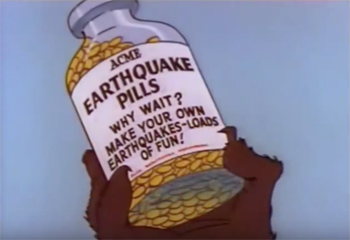
Tell me about it.





Cycling vs Episodic
The term, mood stabilizer, suggests that we are not merely treating episodes of an illness. Rather, we are looking to treat the cycle that drives these episodes. Accordingly, it is more helpful to think of bipolar (and recurrent depression) as a cycling illness rather than an episodic one.
Treating an episode for a patient who cycles is highly problematic - just ask any bipolar patient who has ever been prescribed an antidepressant to treat her depression. Too often, the patient flips into mania. Another result is the cycle may be speeded up, ironically resulting in more depression episodes.
An antimanic agent may not yield such a spectacular mirror effect, but the same principle is in play. As I heard it explained at an International Society of Bipolar Disorder conference I attended in 2006 (sorry, the name of the presenter escapes me), clinicians who treat a manic episode need to be aware of the next phase of the cycle, as well. In other words, being saddled with the sedating effects of an antimanic agent on top of a debilitating depression is the equivalent of pushing two rocks uphill.
SIGN UP FOR MY FREE EMAIL NEWSLETTER
So - in a perfect world, we would have a perfect mood stabilizer, one that brought the cycle under control and thus obviated the need for any other agents. Alas, our mood stabilizers (lithium, plus a range of antiepileptic agents pressed into service as bipolar meds) fall well short of even pretty good. This forces clinicians into an episode mindset, of devising pharmaceutical blockades to box in mania on one pole and coming up with entirely different blockades to keep depression at bay on the other.
In effect, our doctors are stepping on the bulges of an air mattress rather than regulating the flow beneath. Meanwhile, side effects pile up on top of side effects. This is the reality, and the only two antidotes are being smart and skeptical.
Stupid Patient Tricks
- Not telling your doctor about other prescription meds you are on. (Drug interactions are common.)
- Not telling your doctor about over-the-counter meds or natural supplements you are taking. (More interactions. Your doctor is also flying in the dark.)
- Not telling your doctor about any recreational drugs you may be taking, such as marijuana. (Self-evident.)
- Free-lancing with your meds, such as taking one med in your prescribed cocktail but not the other and not letting your doctor know. (Now you have become your own doctor.)
- Not notifying your doctor if you are having difficulties with your meds. (Often there is a simple solution, such as lowering your doses under your doctor's supervision.)
- Being an over-compliant patient. (This means you are giving your doctor no feedback. A good patient makes a lot of noise.)
- Expecting a med to work miracles. (Miracles happen, but your best strategy is to be prepared to capitalize on small gains.
- Staying on your med too long. (The onus of raising the conversation of going off a med lies with you.)
- Abruptly discontinuing your med. (See below.)
- Not informing yourself. (Studies show "expert patients" across all chronic illnesses fare much better than passive ones.)


Bipolar Meds Side Effects
Side effects vary from individual to individual. What you need to know is that lower doses may eliminate troublesome side effects. Doctors have a tendency to take the dosing recommendations on the drug labeling too literally, not recognizing that the clinical trials upon which these doses are based probably do not apply to your current situation.
If you are reading this, then you are most likely in the long-term (maintenance) phase of your illness, rather than the short-term crisis (acute) phase, where meds overkill is both the logical and compassionate treatment. Your doctor is aiming at relapse prevention, you are aiming at recovery, and this critical difference in objective is the source of considerable tension between doctor and patient.
If your meds make you feel like a fat stupid zombie eunuch then your chances of recovery are severely compromised, which your doctor may not appreciate. Moreover, certain side effects - such as tardive dyskinesia - only show up in the long term, while others - such asweight gain - build up over the weeks and months. Still others, such assexual dysfunction or sedation, may be acceptable trade-offs in the short term, but hardly for the rest of your life, while others, such as too little or too much sleep, are going to sabotage your ability to manage your illness.
Virtually all the mood stabilizers (including lithium) and the antipsychotics have a sedating effect, which is just what the doctor ordered for our runaway brains, but not at the expense of blunted cognition and awareness.
Too often, doctors want to keep patients on high doses, as if they are still in crisis. Too often, patients want to go off their meds completely. The middle road is lower doses, for which there is virtually no evidence. The counter-argument is there is virtually no evidence for high dose meds over the long term either, and what little evidence we have strongly suggests the wisdom of embarking on much lower dosing.
Weaning Off Your Meds
Abrupt discontinuation is begging for trouble, which invites in rebound relapses, owing to the brain having habituated to the med, plus other complications. Please carefully check the med's product labeling and follow your doctor's instructions.
Finally
If your doctor cannot answer to your satisfaction the reason for any med he or she wants to put you on or keep you on, what particular symptoms it is supposed to address, in what capacity it is being used (to clear up or prevent symptoms?), study evidence in support of the drug's safety and efficacy, whether the med is FDA-indicated for the particular purpose or is being used off-label, common side effects, results observed with the med in the doctor's own practice, its interactions with other meds, whether there is any conflict-of-interest in the doctor prescribing the med (such as being a paid speaker), and how long you are expected to stay on the med ...
Then you have every right to refuse to take the med.
For that matter, you don't need a good reason to refuse to take any med. But you need to insist on good reasons for being put on a med or staying on a med. Your doctor citing the need to keep you from being rehospitalized as the ONLY reason is NOT a good reason.
Further Reading
It is strongly suggested you read this article in conjunction with the other bipolar treatment articles on mcmanweb. These include:
Treating Mania * Treating Hypomania * Treating Bipolar Depression *Lithium and Mood Stabilizers * Antipsychotics
Also, for a more global view of managing your illness, please check out the other articles in this Treatment section, as well as the articles in the Recovery section.
Reviewed June 30, 2016
VIDEO
NEW!
Follow me on the road. Check out my New Heart, New Start blog.